Publications

Recent peer-reviewed Articles

  1. Levis, M. & Levis, A.J. (2020). Contextual Assessment: Evaluating a novel self-guided online therapeutic assessment. International Journal of Psychiatry in Clinical Practice. DOI: 10.1080/13651501.2020.1794010

  2. Levis, M., Levis, A.J., Walker, M., Pilz, M., Eisemann, A. (2020). Self-Guided Psycho-Oncology: A Pilot Implementation Study Evaluating Usage of Conflict Analysis with Cancer Patients. DOI: 10.1080/15401383.2020.1848680

  3. Levis, M. & Levis, A.J. (2021). Evaluating the therapeutic and diagnostic benefits of Conflict Analysis, a self-guided online therapeutic assessment: An online case study. British Journal of Psychotherapy. DOI: 10.1111/BJP.12603

  4. Levis, M. & Levis, A.J. (2021). Contrasting narratives: a randomised control study comparing Conflict Analysis and narrative disclosure. DOI:10.1080/03069885.2021.1970111

  5. Levis, M., Ludmer, D., Cornelius, S. Watts, B.V., & Shiner, B. (2022). An implementation and effectiveness study evaluating Conflict Analysis in VA residential substance abuse services: Whole Health informed self-guided online care. Explore. DOI:10.1016/j.explore.2022.02.005

  6. Levis, M., Ludmer, D,.Shiner, B. (2022). Self-guided online therapeutic assessment in substance abuse care: A Conflict Analysis implementation and feasibility case study. DOI:10.1016/j.chbr.2022.100178
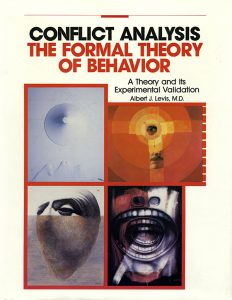
This introduction to the Formal Theory is an extensive methodological treatise for the scientific study of behavior. The formal methodology isolates a unit phenomenon of behavior, identified as the Conflict Resolution Process (CRP), considers it as a representative sample of the symbolic universe, the realm under study, and examines its formal organization, that is, the interrelation of its elements within a system.

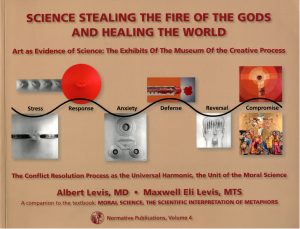
This volume explores the art exhibits of the Museum of the Creative Process; art as evidence of science. The well-illustrated volume presents five art exhibits demonstrating the dialectic nature of the creative process resolving conflicts along four alternative types of resolutions.
This volume presents an explanation of the Formal Theoretical concepts alongside the self-assessment instrument. The Conflict Analysis Battery (CAB) measures the personal unconscious validating experimentally the theory by demonstrating that the unconscious indeed is a natural science conflict resolving phenomenon abiding by the laws of the two phenomena of science.
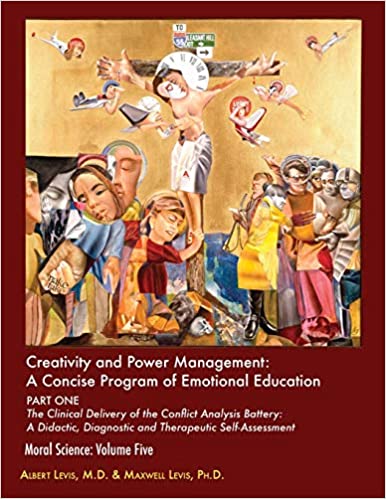
This volume’s focus is the Clinical Delivery of the Conflict Analysis Battery: A Didactic, Diagnostic and Therapeutic Self-Assessment. It presents case studies illustrating the effectiveness of the Conflict Analysis Battery (CAB) in providing insights and manual-driven guidance to clinically diagnosed patients, validating the CAB’s therapeutic application. Using either a workbook or the online delivery of the assessment results in a meaningful emotional release for the test-taker without the need for professional intervention.
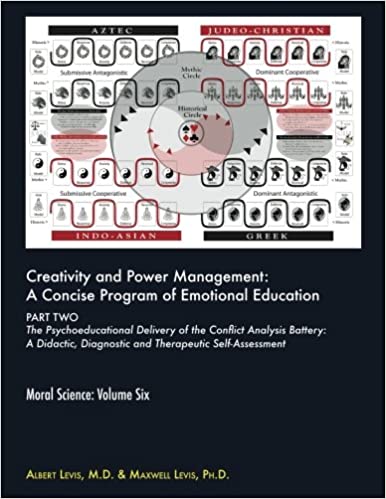
This volume’s focus is the Psychoeducational Delivery of the Conflict Analysis Battery: A Didactic, Diagnostic and Therapeutic Self-Assessment. It examines the effectiveness of the Conflict Analysis Battery (CAB) in educating the public about the Formal Theoretical concepts and introduces a secondary teaching technology: the card game Moral Monopoly. This game integrates the religions of the world as complementary discoveries of science merged into the Moral Science. The Moral Science reconciles them and completes their mission emphasizing the scientific principle of mutual respect in the analysis of all creativity.